
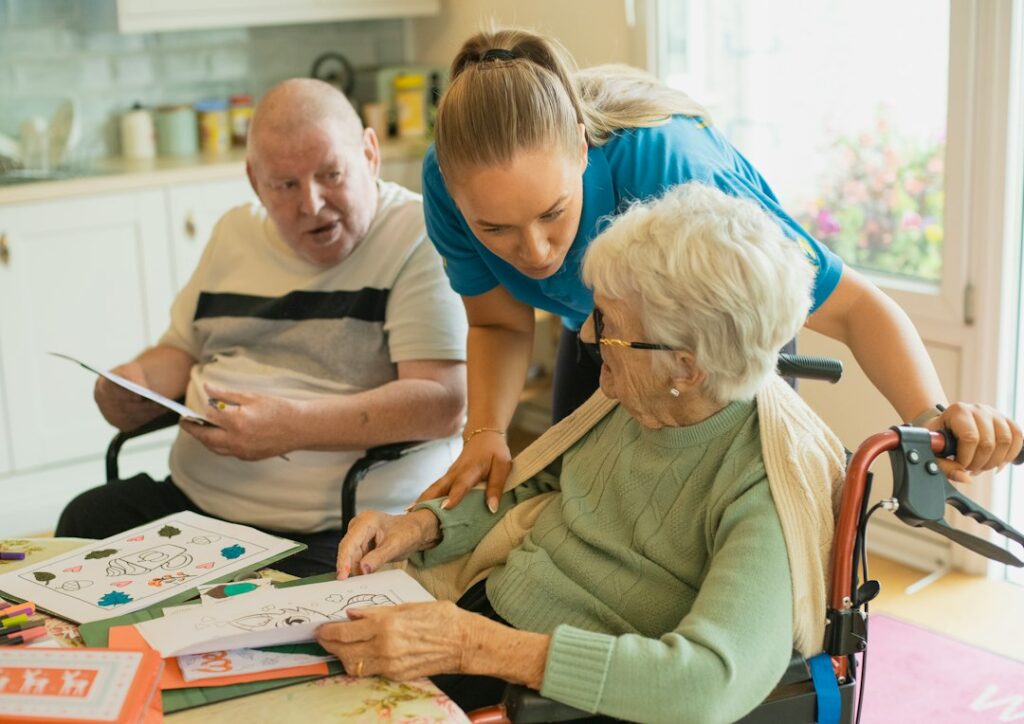
Intergenerational activities bring older adults and younger people together for shared learning, conversation, creativity, and companionship. In assisted living, these activities can support emotional well-being, mental stimulation, physical engagement, and a stronger sense of belonging.
What are intergenerational activities?
Intergenerational activities are planned interactions between people from different age groups. In assisted living, this may include residents spending time with children, teenagers, young adults, or younger family members.
The activity does not have to be elaborate. Examples include:
- Reading stories together
- Working on art or craft projects
- Playing board games or card games
- Sharing family recipes
- Gardening or planting flowers
- Recording oral histories
- Writing letters or creating seasonal cards
- Listening to music from different generations
- Completing simple technology lessons
- Celebrating birthdays, holidays, or cultural traditions
The most successful activities are built around mutual participation. Older adults are not simply watching younger visitors, and younger people are not treated as performers. Each group should have a meaningful role.
How can these activities benefit assisted living residents?
Intergenerational programs can improve social connection and give residents regular opportunities to interact with people outside their usual age group. This variety may help reduce loneliness, especially for residents whose relatives live far away or cannot visit often.
A visit from a child or teenager can also create natural conversation. Residents may talk about school, hobbies, family traditions, music, work, pets, or neighborhood history. These discussions can help residents feel heard and valued.
Intergenerational activities may support:
- Improved mood and reduced feelings of isolation
- More frequent conversation and social participation
- A stronger sense of purpose
- Opportunities to share knowledge and life experience
- Mental stimulation through games, storytelling, and learning
- Gentle movement through crafts, gardening, or group activities
- Greater variety in the daily routine
These benefits are not automatic. The activity should match residents’ interests, energy levels, communication abilities, and comfort with group settings.
Why does sharing life experience matter?
Many older adults have valuable knowledge that may not be visible in a typical daily routine. They may know how to sew, repair household items, preserve food, play an instrument, care for plants, write cursive, or describe how local life has changed over several decades.
Teaching a skill or telling a story can reinforce identity and self-esteem. A resident who has difficulty participating in fast-paced conversation may still be able to demonstrate a familiar task or explain a personal tradition.
Younger participants benefit as well. They may gain patience, listening skills, historical understanding, and a more personal view of aging. Intergenerational contact can challenge the assumption that older adults and young people have little in common.
Which activities work well for residents with memory loss?
Residents with memory loss can often participate successfully when activities are familiar, sensory, and focused on the present moment rather than performance.
Helpful options may include:
- Folding towels or sorting large, colorful objects
- Singing familiar songs
- Looking through picture books or family photographs
- Decorating cookies or assembling simple snacks
- Watering plants
- Matching colors, shapes, or large cards
- Creating collages from magazines
- Listening to younger participants read short stories
The goal is not to test memory. Questions that require a correct answer can create frustration. Open-ended prompts such as “What kind of music did you enjoy?” or “What colors would you like to use?” are usually more comfortable.
Activities should be adapted for vision, hearing, mobility, and attention span. Quiet spaces, clear instructions, and short sessions can make participation easier.
How should activities be planned in McKeesport, PA?
Local conditions can affect how intergenerational programs are organized. Seasonal weather may limit outdoor activities during cold, wet, or icy periods, so indoor alternatives should be available. In warmer months, shaded courtyards, raised planting containers, or short supervised walks may offer residents a change of setting without requiring strenuous travel.
Households in the area may also have different schedules, transportation limitations, and caregiving responsibilities. Programs are easier to sustain when visits are planned in advance, activities begin and end on time, and participation does not depend on every family having flexible weekday availability.
Good planning includes:
- Choosing a small, comfortable group size
- Selecting activities that do not require expensive supplies
- Providing chairs and accessible tables
- Reducing background noise for residents with hearing difficulty
- Offering transportation and parking information to authorized visitors when needed
- Preparing an indoor plan for seasonal weather
- Explaining behavior, privacy, and supervision expectations before the activity
- Allowing residents to observe without pressure to participate

In assisted living, staff should also consider infection-control practices, emergency procedures, and each resident’s care plan.
What are common challenges?
Intergenerational activities may be less successful if the event is too long, too noisy, or too focused on a single age group. Young children may become restless, while older adults may tire quickly or have difficulty hearing in a crowded room.
Some residents may not enjoy being around children or may prefer one-on-one visits. Others may feel uncomfortable with unfamiliar technology or fast-paced games. Participation should remain voluntary.
Clear structure helps. A 30- to 45-minute activity with a simple beginning, middle, and ending may be more effective than an unplanned social gathering. It can also help to provide several ways to participate, such as talking, creating, observing, or helping with setup.
Privacy is another consideration. Photos, recordings, and stories should not be shared publicly without appropriate permission. Personal information, medical details, and family matters should remain private.
How can families support intergenerational connection?
Families can support these relationships by sharing information about a resident’s interests, background, communication style, and preferred activities. A short conversation starter may help a younger visitor feel more comfortable.
Useful prompts include:
- “What games did you play as a child?”
- “What was your first job?”
- “What family celebration do you remember most?”
- “Which songs bring back good memories?”
- “What advice would you give someone learning this skill?”
- “What did the neighborhood look like when you were younger?”
Visits do not need to be frequent or lengthy to be meaningful. A consistent monthly visit, a handwritten note, or a shared seasonal project may provide more value than a single large event.
How can success be measured?
Success should be measured by resident experience rather than attendance alone. Staff and families can look for signs such as residents initiating conversation, showing increased interest, recalling a pleasant interaction, displaying relaxation, or asking when the next visit will occur.
It is also useful to ask residents simple questions afterward:
- Did you enjoy the activity?
- Would you like to do something similar again?
- Was the group too large or too noisy?
- What would make the visit more comfortable?
- Would you prefer a different activity or age group?
Intergenerational programming works best when it is adjusted over time. A quiet storytelling session may appeal to one group, while another may prefer gardening, music, games, or practical demonstrations. The central purpose is to create respectful relationships in which every participant has something to contribute.
